Who Was Caspar David Friedrich? The Man Behind the Misty Landscapes
A personal deep-dive into Caspar David Friedrich, the Romantic painter of sublime landscapes. Explore his life, philosophy, and why his work on human solitude in nature still captivates us today.

Who Was Caspar David Friedrich? The Revolutionary Who Taught Landscapes to Speak
Have you ever stood before a painting and felt a profound, almost unnerving silence? Not an empty silence, but a deep, resonant quiet that seems to pull you in, making you acutely aware of your own presence in the world? It's a feeling that cuts through the noise of modern life, forcing a moment of confrontation not with the canvas, but with yourself. That, for me, is the unique magic of Caspar David Friedrich. He didn't just paint landscapes; he painted the quiet space between a person and the infinite.
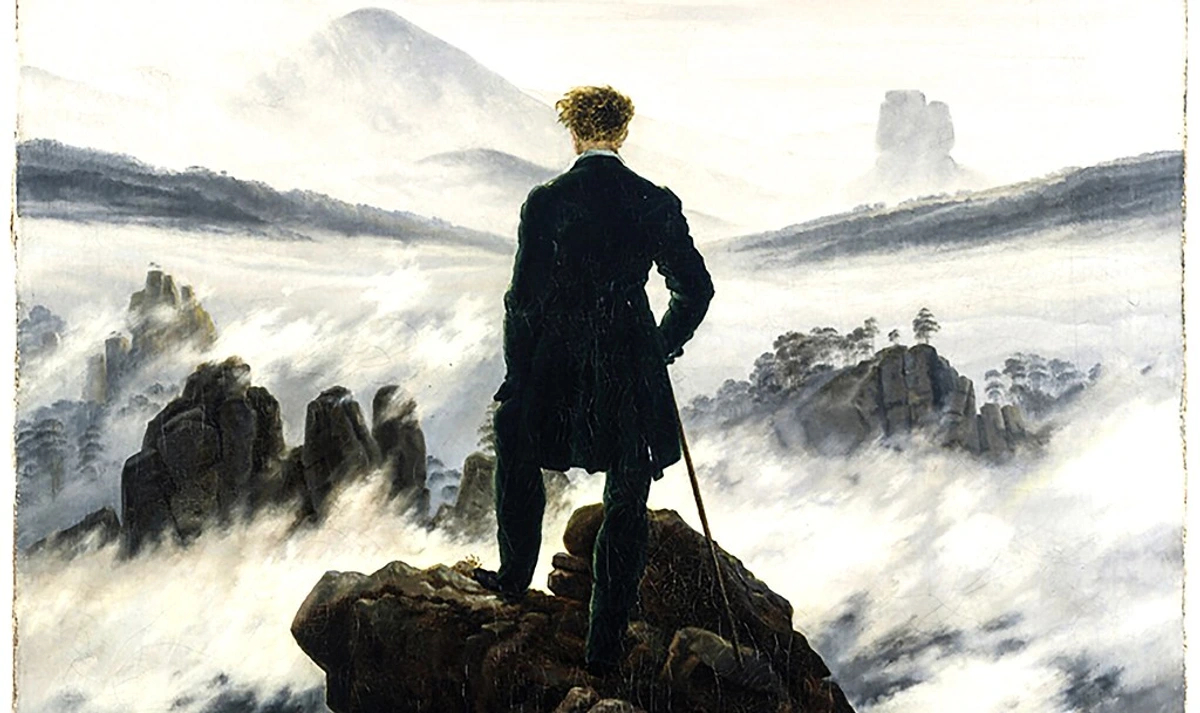
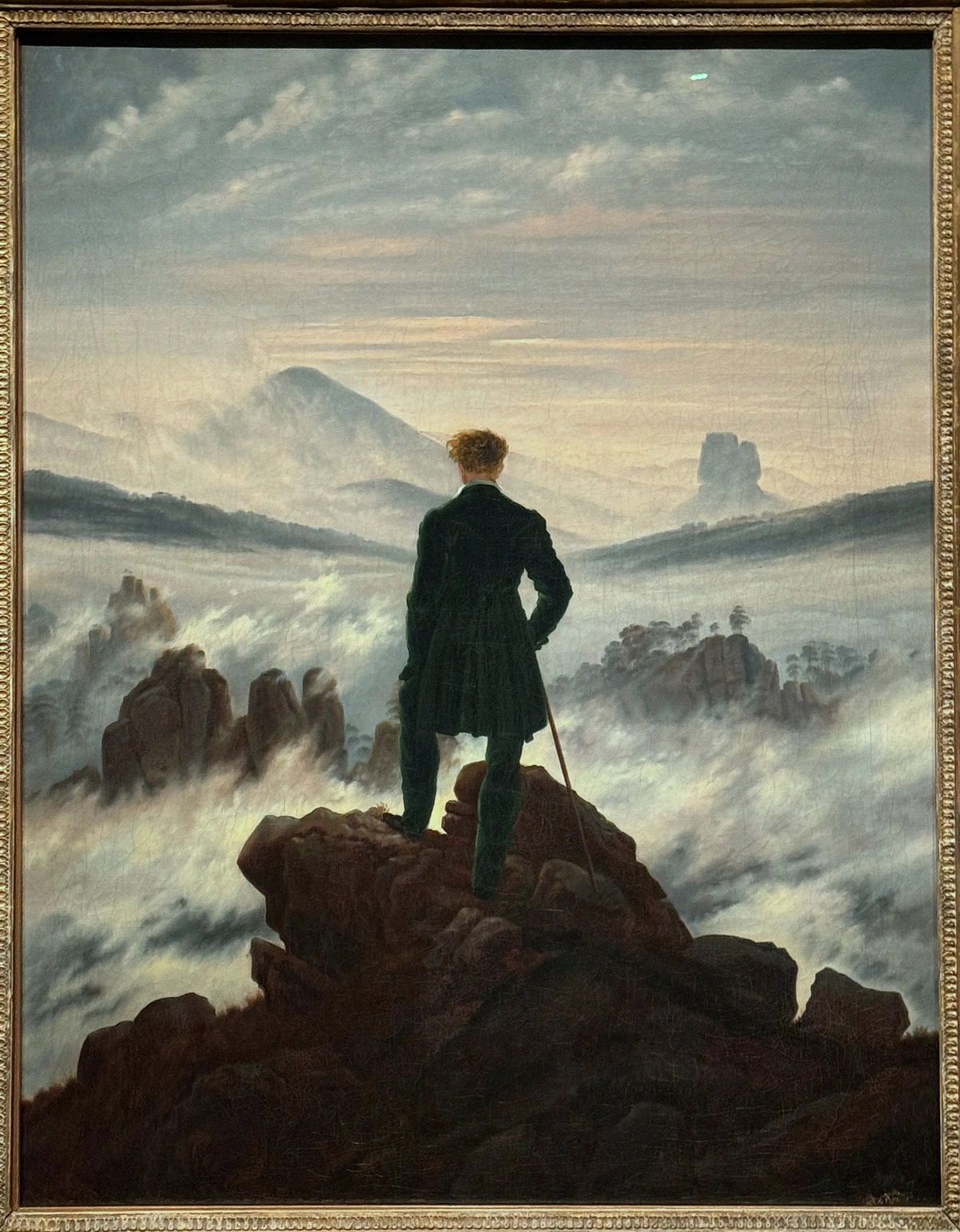
I remember the first time I saw Wanderer above the Sea of Fog. I was in a crowded museum, surrounded by noise, but the painting stopped me cold. The figure, seen from behind, stands on a rocky precipice, looking out over a sea of rolling mist and distant peaks. The world feels vast, ancient, and indifferent. And the man? He is alone, a solitary pinprick against the majesty of creation. It’s a moment of pure, unadulterated contemplation. Friedrich doesn't tell you what the figure is thinking; he forces you to think.


This article is an exploration of the man behind these powerful, often haunting, images. We'll delve into his life, his art, and the philosophy that made him a cornerstone of German Romanticism. By the end, I hope you'll see why Friedrich's work is not just a historical artifact, but a mirror reflecting our own modern relationship with nature and the self.

From Personal Tragedy to a Profound Worldview
You can't fully grasp Friedrich's art without understanding the events that shaped him. Born in 1774 in the port town of Greifswald, on the Baltic Sea (then part of Swedish Pomerania), his life was marked by loss from an early age. His mother, Sophie Dorothea Bechly, died when he was seven. A younger sister, Elisabeth, passed away a few years later. Then, in a defining tragedy that would haunt him for life, the 13-year-old Friedrich watched his brother Johann Christoffer fall through the ice of a frozen lake and drown. Some accounts suggest Friedrich himself was in danger and his brother died trying to save him, a memory that would later imbue his paintings of frozen seas and wintery graves with a terrifying sense of personal truth.

It's impossible to separate this early, intimate acquaintance with mortality from the themes that would dominate his canvases. Death, eternity, and the power of nature are not abstract concepts for Friedrich; they are lived realities. His paintings often feature solitary figures standing before vast, overwhelming landscapes. Are they meant to symbolize human insignificance? Or perhaps, the opposite—the profound courage it takes to stand alone and confront the sublime?

He studied at the prestigious Royal Danish Academy of Fine Arts in Copenhagen, a hub of artistic thought that emphasized drawing from life. This rigorous training gave him an almost scientific precision in rendering the details of nature—the texture of bark, the shimmer of light on water, the delicate structure of a distant ruin. But Friedrich wasn't interested in simply reproducing what he saw. He moved to Dresden, the heart of the Romantic movement in Germany, where he would spend most of his life.
Dresden was a revelation. It was there, surrounded by intellectuals, poets like Goethe (with whom he had a complex relationship), and philosophers, that his unique artistic language truly began to take shape. The city's proximity to the dramatic landscapes of Saxon Switzerland provided the perfect natural studio for his emerging vision. He would take long sketching trips into the mountains and along the Baltic coast, filling notebooks with details that would later be synthesized into his powerful, symbolic compositions.
The Tenets of Friedrich's Artistry: Landscapes with a Soul
Friedrich’s work is built on a set of core principles that feel surprisingly modern, even radical, for his time. He wasn't painting mythological or historical scenes like his contemporaries. Instead, he invested the landscape itself with deep philosophical and spiritual meaning.
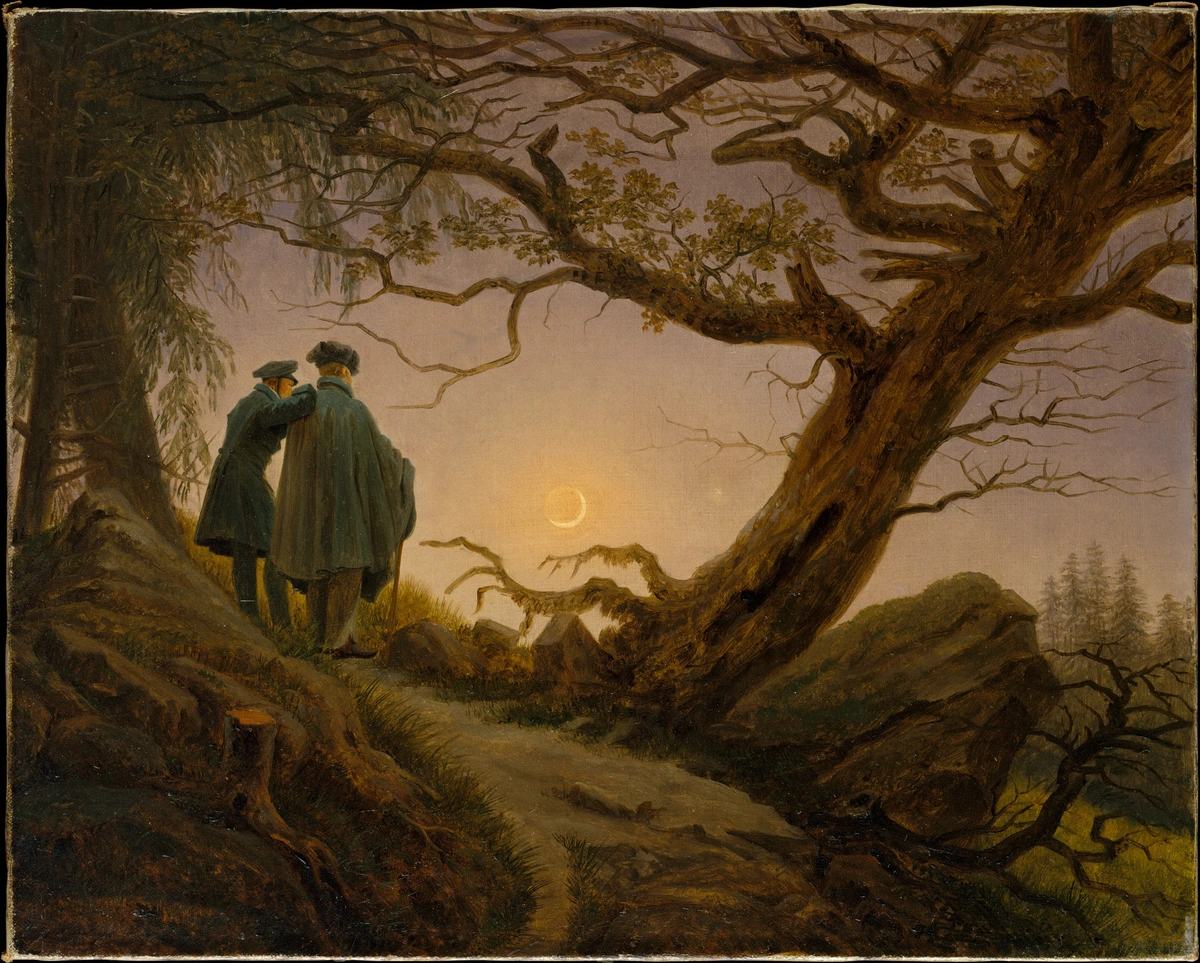

The Allure of the Rückenfigur
His most famous device is the Rückenfigur—a figure seen from behind. This is Friedrich's masterstroke, his stroke of genius. By denying us the subject’s face, he erases a specific personality. The figure becomes an everyman. It could be you; it could be me. This forces a direct, unmediated experience for the viewer. We don't observe the figure’s contemplation; we occupy the space they are in, and we perform the act of contemplation ourselves. It’s an incredibly immersive device that breaks down the barrier between the viewer and the painting.
Nature as a Spiritual Guide
For Friedrich, nature was not a mere backdrop. It was the physical manifestation of the divine. His meticulously detailed trees, misty mountains, and Gothic ruins are imbued with a complex language of symbolism. A gnarled, solitary oak tree, often clinging to a rocky outcrop, represented the enduring strength of the German people through hardship. Morning light breaking through dark clouds (sunburst) was a direct symbol of hope and God's grace. A Gothic ruin, overgrown with foliage, spoke to the transience of human works and the eternal return of nature.
His landscapes are never just topography. They are theology written in earth, sea, and sky. He believed the artist's duty was not to imitate the world, but to reveal its hidden spiritual meaning. "The artist's feeling is his law," he once argued, a remarkably modern idea that placed individual emotion and perception at the very center of the creative act. This wasn't just a stylistic choice; it was a philosophical rebellion against the Enlightenment's cold rationalism, positioning the artist as a new kind of priest or prophet, interpreting the divine text of nature itself.
The Sublime and a Dose of Melancholy
Friedrich was a master of the sublime. In 18th and 19th-century philosophy, the sublime was the feeling of awe mixed with a touch of terror we experience when confronted with something vastly more powerful than ourselves—a thunderstorm, a massive mountain range, an endless ocean. Friedrich’s canvases are a textbook exploration of this feeling. They are often tinged with what the Germans call Weltschmerz, a deep, worldly melancholy or sadness.
This isn't depression, but rather a poignant awareness of the gap between the world as it is and the world as we wish it could be. It's the bittersweet recognition of our own smallness, and yet, our deep connection to something eternal within nature.
Key Paintings: Windows into a Worldview
Wanderer above the Sea of Fog (c. 1818)
We already touched upon this one, but its significance can't be overstated. The dandy, with his green frock coat and cane, has conquered the rocky peak. But his stance isn't one of triumph. His legs are planted, stable amidst the swirling uncertainty of the fog. He appears to be at the very edge of understanding. This is the painting that perfectly encapsulates the Romantic hero: solitary, reflective, and face-to-face with the sublime power of the natural world. I often wonder if the figure isn't just looking at the landscape, but also at the future—at the immense, often terrifying, potential of the individual in an age of revolution and uncertainty.
The Sea of Ice (also known as The Wreck of the Hope) (c. 1823-24)
This painting is a radical departure. It is bleak, chaotic, and brutal. Jagged shards of ice, painted with a terrifyingly realistic texture, are piled haphazardly upon one another. In the bottom right corner, almost lost amid the frozen chaos, is the stern of a wooden ship—the Hope—being crushed.
It's no coincidence that this was painted after a series of personal and political disappointments for Friedrich. The ordered, spiritual world he sought seemed to be shattering. This painting is not about contemplation; it's about catastrophe. It is a profound and terrifying meditation on the destructive, indifferent forces of nature.
Monk by the Sea (c. 1808-1810)
In this painting, Friedrich strips away almost everything. A tiny, dark monk stands before a vast, empty beach that gives way to a dark, brooding sea and an immense sky. The land, sea, and sky are reduced to three simple, horizontal bands of color. When it was first exhibited, critics were shocked by its minimalism.
"With such a subject, one could paint oneself mad," one critic wrote. But that was Friedrich's intent. He reduces the world to its elemental forms to plunge the viewer into a state of pure, existential reverence. You feel the sheer scale of the world and the profound isolation of the individual soul.
A Brush with Politics: Friedrich in a Revolutionary Age
You can't fully separate Friedrich's art from the turbulent era in which he lived. He came of age during the Napoleonic Wars, a period that saw German lands invaded, dismantled, and reshaped. This wasn't just political background noise; it was a deeply personal and intellectual trauma that seeped into his work. His emphasis on German folklore, ancient ruins, and the steadfastness of nature were, in part, a reaction to French cultural and military dominance. His solitary figures, standing resolute against vast landscapes, can be read as a quiet but firm statement of national identity and spiritual fortitude in the face of foreign invasion.
Yet, it's crucial to understand Friedrich's "nationalism" within its 19th-century context. It wasn't the aggressive, exclusionary ideology of the twentieth century, but rather a Romantic yearning for a unified German cultural identity based on a shared history and landscape. His paintings were never calls to arms, but invitations to contemplation—to find strength in the ancient spirit of the land itself.
Painting Title  | Year | Key Themes & Notes |
|---|---|---|
| The Tetschen Altar (Cross in the Mountains) | c. 1807 | A radical landscape altarpiece placing a crucifix in a mountainous sunset. |
| Abbey in the Oakwood | c. 1809-10 | A haunting depiction of a ruined Gothic abbey amid barren winter oaks, exploring death & transience. |
| Monk by the Sea | c. 1808-10 | A revolutionary, minimalist composition emphasizing human smallness against vast nature. |
| Wanderer above the Sea of Fog | c. 1818 | The quintessential Rückenfigur, embodying the Romantic spirit of solitary contemplation. |
| Chalk Cliffs on Rügen | c. 1818-19 | A vibrant, detailed landscape that still contains subtle symbols of life, death, and eternal change. |
| The Sea of Ice | c. 1823-24 | A terrifying vision of nature's destructive power, inspired by real polar expeditions. |
| The Stages of Life | c. 1835 | A poignant, late work reflecting on mortality, showing figures at different stages of life. |
Friedrich's Lasting Influence: An Echo in Modern Art
So why does Caspar David Friedrich still matter today? Look around. You can see his fingerprints all over modern and contemporary art. The sublime landscapes of the American Hudson River School are unthinkable without him. The Symbolists of the late 19th century found in him a master of hidden meaning.
Even in the 20th century, the Surrealists admired his dreamlike quality, and the Abstract Expressionists like Mark Rothko, with his vast, emotive fields of color, seem to be chasing the same feeling of spiritual awe that Friedrich captured in Monk by the Sea.
But let's look beyond the canvas. The ethos of Friedrich is alive and well in the dramatic, large-scale abstract art of the 21st century. Artists working today continue to grapple with the challenge of expressing inner life through external forms, whether through intense color palettes that evoke emotion or monumental installations that force a physical confrontation.
And the lineage doesn't end there. Think about how you frame a photo on your phone. The act of capturing a sunset or a vast mountain vista, often with a figure (maybe a friend) seen from the back, is a thoroughly Friedrichian impulse. We instinctively try to capture the sublime and translate a feeling into an image. In a way, Friedrich didn't just influence art; he shaped how modern humanity sees and photographs the natural world, influencing generations of landscape photographers from Ansel Adams to Sebastião Salgado, who use light and shadow to make nature feel sacred and immense.
For me, Friedrich's true legacy is that he gave us a visual language for introspection. In our hyper-connected, frantic world, his paintings are a sanctuary. They are an invitation to turn our backs on the noise, for just a moment, and gaze out into the fog.
Artistic Movement | Approx. Period | Connection to Friedrich |
|---|---|---|
| Hudson River School | c. 1825-1875 | Directly inspired by his spiritual and detailed approach to landscape. |
| Symbolism | c. 1880-1910 | Adopted his use of landscape elements to convey abstract ideas and emotions. |
| Surrealism | c. 1920s-1950s | Admired the dreamlike, contemplative, and sometimes unsettling atmosphere of his work. |
| Abstract Expressionism | c. 1940s-1960s | Artists like Mark Rothko explored the same "sublime" feeling through abstract color fields. |
| Contemporary Photography | c. 1970s-Present | Influenced landscape photography that focuses on atmosphere, solitude, and the human condition. |
Looking closer at these connections reveals the depth of his shadow. The American painters of the Hudson River School, like Frederic Edwin Church and Albert Bierstadt, inherited Friedrich's idea that a landscape could be a spiritual autobiography. Their vast American wildernesses are direct descendants of his German and Baltic vistas. Similarly, the Symbolist painters of the late 19th century, from Arnold Böcklin to Edvard Munch, found in Friedrich a master of using the visible world to express the invisible world of the psyche.
His influence stretches far beyond painting. The haunting, atmospheric shots of German Expressionist cinema, especially the work of F.W. Murnau (Nosferatu) or Fritz Lang, owe a debt to Friedrich's brooding, shadowy landscapes and dramatic chiaroscuro. Some have even argued that the long, contemplative takes of contemporary filmmakers like Andrei Tarkovsky and Terrence Malick are a form of cinematic Rückenfigur, asking the audience to inhabit the perspective of a character confronting the sublime. And as for Mark Rothko, standing in front of one of his color-field paintings, feeling that immense pull of emotion from a few simple shapes, you are experiencing the same sublime awe that Friedrich sought to capture in Monk by the Sea. The language is different—abstract instead of representational—but the goal of plunging the viewer into a state of spiritual contemplation is exactly the same.
Frequently Asked Questions (FAQ)
I often find myself wondering about the man behind the misty mountains. Here are answers to some of the most common questions about Caspar David Friedrich.
What is Friedrich's most famous painting?
Without a doubt, it's Wanderer above the Sea of Fog. It has become a true cultural icon, representing introspection and the Romantic ideal. You've probably seen it countless times in movies, on book covers, or as a meme.
What does the Wanderer above the Sea of Fog symbolize?
This is the beautiful thing about it—there is no single answer. It can represent the triumph of the individual, the feeling of being lost in the face of destiny, the search for meaning, or human mastery over nature. The ambiguity is its greatest strength, allowing every viewer to find their own story within it.
Why did Friedrich paint so many lonely figures?
That's the core of his philosophy. He saw solitude not as loneliness, but as a prerequisite for true spiritual connection. When you are alone in nature, the distractions of society fall away, and you can confront the divine directly. His figures are solitary so they can be contemplative.
What was the "sublime" in Romantic art?
Ah, a great question. It's the mix of awe and terror you feel when you stand before something so vast and powerful it's almost incomprehensible. Think of a thunderstorm, a massive cliff, or the endless ocean. It makes you feel small, but also deeply alive. Friedrich was a master at evoking this feeling through paint.
Where can I see his paintings in person?
His work is housed in major museums, primarily in Germany. The best places to see his art are the Alte Nationalgalerie in Berlin, the Hamburger Kunsthalle, and the Gemäldegalerie in Dresden. If you ever get the chance, seeing one in person is an entirely different experience from looking at a reproduction. No photograph can capture the subtle layers of his glazing or the precise emotional weight of his compositions.
How did Friedrich influence modern art?
His legacy is immense. He paved the way for purely emotional and symbolic landscape painting. You can see his influence in the epic American landscapes of the Hudson River School, the dreamlike scenes of the Symbolists, and even in the vast, color-field paintings of Abstract Expressionists like Mark Rothko. He created a new language for expressing inner life through outer landscapes.
A Philosophy of Light and Earth: Friedrich's Technique
It's one thing to discuss Friedrich's philosophical ideas, but how did he translate them into paint? His technique was as deliberate as his compositions. After his early academic training, which gave him a masterful grip on drawing, he developed a highly personal method to achieve his signature atmospheric effects—those vast, glowing skies and misty, receding distances. He worked in thin glazes, building up layers of nearly transparent color over meticulously prepared grounds. This allowed light to penetrate the paint layers and reflect back, giving his canvases an inner luminescence. If you stand in front of an original, you'll notice the light feels like it's coming from within the painting, not just reflecting off the surface.
This glazing technique was especially crucial for his famous sunbursts and depictions of dawn or dusk. He would layer yellows and whites over darker underlayers to create a sense of dazzling, sublime illumination. For the deep blues of his seas and skies, he often used expensive pigments like lapis lazuli, ensuring the colors remained vibrant and resonant. His work wasn't about capturing a fleeting moment like the Impressionists would later do, but about creating a timeless, symbolic reality, and his slow, deliberate technique was perfectly suited to this goal.
However, his relationship with the great German luminary, Johann Wolfgang von Goethe, was far more complex. Goethe, the titan of German literature, was initially intrigued by Friedrich's work but ultimately found it too inward-looking and melancholic. For the classically-minded Goethe, art should aspire to an ideal clarity and universal beauty. Friedrich's subjective, emotional landscapes clashed with this view. In one famous anecdote, Goethe reportedly visited Friedrich's studio and was dismissive of his symbolic approach, a moment that surely must have wounded the sensitive artist. This tension speaks volumes about the artistic divides of the era, pitting the classical ideal against the nascent Romantic spirit that Friedrich championed.
Looking out into the fog, he asked a question we are all still trying to answer.